
Introduction
The centuries-old nomadic lifestyle of the Bakrwal (Gujjar Bakrwal) community is under serious threat due to climate change, shrinking grazing lands, and restrictive forest policies in Pakistan. These indigenous pastoralists, who have long played a vital role in sustaining mountain ecosystems and the livestock economy, are now facing unprecedented challenges that endanger both their culture and livelihoods.
Currently, more than 400 Bakrwal households, led by community elder Abdul Rauf, along with millions of sheep and goats, are stranded in the high-altitude pastures of Deosai National Park and Astore, at an elevation of 12,479 feet, where severe fodder shortages have emerged.
Who Are the Bakrwals?
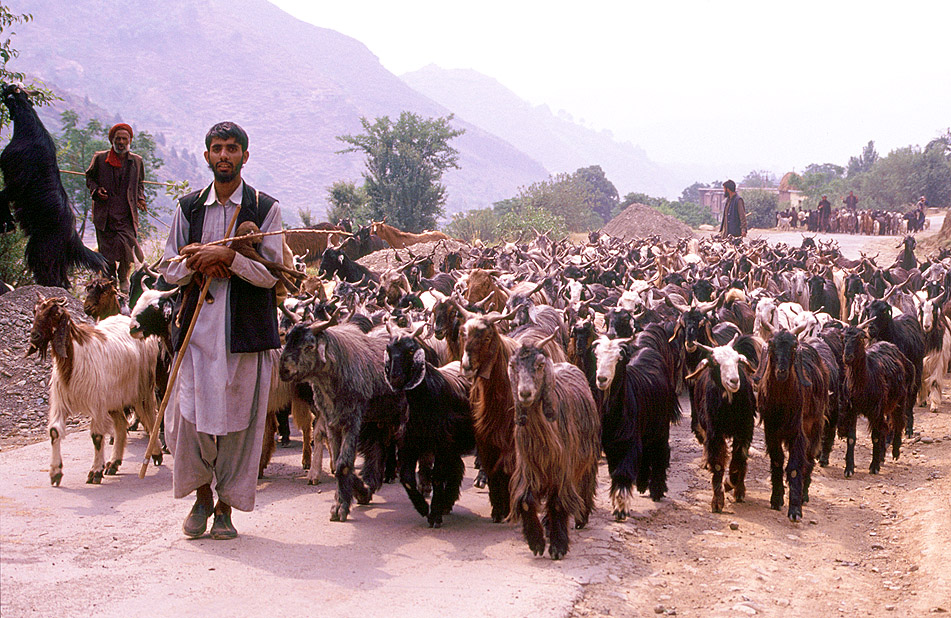
The Bakrwals are a nomadic pastoral community traditionally engaged in rearing sheep and goats. They migrate seasonally between lowland plains in winter and high-altitude pastures in summer, following routes that have existed for centuries. Their population is spread across Khyber Pakhtunkhwa, Azad Jammu and Kashmir, and Punjab.
Their primary sources of income include:
- Sale of livestock
- Meat production
- Wool and leather trade
This traditional system supports not only the Bakrwals but also Pakistan’s organic meat, wool, and leather industries.
Economic and Environmental Importance
Research conducted by Professor Dr. Muhammad Nafees (University of Peshawar) in collaboration with the University of Bern, Switzerland, highlights the critical role of Bakrwals in Pakistan’s economy and environment.
In the Hazara and Malakand divisions alone:
- Around 7,400 Bakrwal families own nearly one million livestock
- They contribute approximately USD 64 million annually through meat, wool, and leather
Beyond economics, Bakrwals help maintain nutrient cycles by fertilizing pastures with nitrogen and phosphorus. Their livestock aids in natural pollination, supporting biodiversity and healthy mountain ecosystems. Experts describe them as the backbone of sustainable, organic livestock production in Pakistan.
Invisible in National Records
Despite their contributions, Bakrwals remain absent from official population data, including Pakistan’s 2017 census. Due to their nomadic lifestyle and lack of permanent addresses, many are not registered with NADRA and do not possess national identity cards.
The last reliable data on Gujjar Bakrwals dates back to the 1931 Indian census, which recorded around two million Bakrwals across eight Indian states. This lack of recognition further marginalizes the community and limits access to basic rights and services.
Climate Change and Livelihood Crisis
Climate change in Pakistan has become the biggest threat to the Bakrwal way of life. According to community members, unseasonal rainfall, prolonged snowfall, and rising temperatures have made traditional migration routes dangerous and unpredictable.
Bakrwal migrations traditionally follow the Gujri calendar, beginning around the month of Baisakh. However, erratic weather now delays travel, reducing grazing time and weakening livestock.
Officials from the Pakistan Meteorological Department confirm that winter rainfall patterns have shifted, with less rain at the start of winter and heavier rainfall toward the end, disrupting ecological balance.
Livestock accustomed to cold climates suffer when suddenly exposed to extreme heat in Punjab’s plains, leading to illness, mass losses, and forced distress sales at low prices. In recent years, Bakrwals have lost hundreds of animals due to sudden temperature shifts and heavy rains.
Restrictions on Forest Access
Another major challenge is the ban on on-foot migration through forests imposed by the Khyber Pakhtunkhwa Forest Department to protect plantations under the Billion Tree Tsunami Project. While authorities allow livestock transport by vehicles, Bakrwals argue that:
- Poor road conditions injure animals
- Transportation costs are unaffordable
- Truck travel contradicts their traditional grazing system
Experts warn that excluding Bakrwals from forest management policies undermines both conservation goals and indigenous rights.
Shrinking Grazing Lands
Researchers note that traditional grazing lands are rapidly being converted into agricultural fields, reducing available pastures. Where Bakrwals once owned thousands of animals, many now struggle to maintain even a few hundred, accelerating economic decline.
Protecting Indigenous Pastoral Communities
Pakistan is a signatory to the United Nations Declaration on the Rights of Indigenous Peoples (UNDRIP, 2007), which obligates the state to protect indigenous cultures and livelihoods.
Policy experts recommend:
- Including Bakrwals in forest and national park management policies
- Recognizing their economic contribution in GDP calculations
- Developing climate-adaptive migration calendars
- Providing weather alerts, livestock vaccination, and veterinary support
- Introducing mobile schools, healthcare services, and mobile courts
- Defining grazing zones beyond certain altitudes to protect both farms and pastures
Countries like Afghanistan have successfully integrated Bakrwals into national policy frameworks, offering a model Pakistan could adopt.
Conclusion
If current challenges remain unaddressed, the Bakrwal community may be forced to abandon its ancestral profession. This would not only erase a centuries-old indigenous culture but also damage Pakistan’s livestock economy, leather and wool industries, and fragile mountain ecosystems.
Protecting the Bakrwals is not just a matter of cultural preservation—it is a crucial step toward climate resilience, sustainable development, and environmental conservation in Pakistan.
#BakrwalCommunity #ClimateChangePakistan #IndigenousPeoples #MountainEcosystems #DeosaiNationalPark #PastoralLivelihoods #GujjarBakrwal #EnvironmentalJustice #SustainableLivestock #UNDRIP